
Checked 26 November 2026. Disclosure: UK Outdoor Advertising Journal is published by people connected with TRZY UK, which plans advertising campaigns. Third-party figures are published market information, not TRZY UK prices. About this site and our disclosure.
The short answer
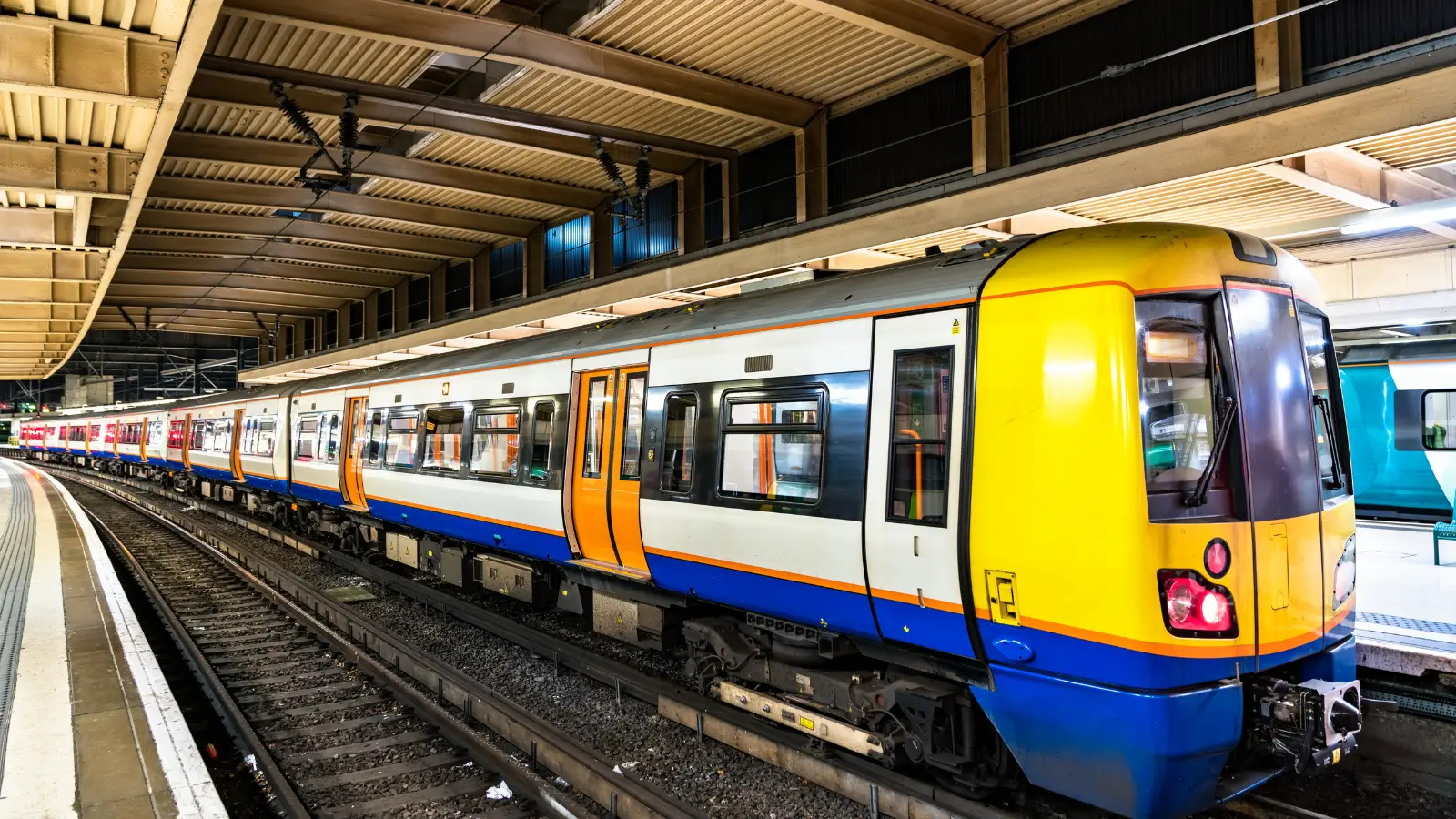
London’s train stations combine huge commuter flows with waiting time on concourses and platforms, which makes them strong places for both reach and longer messages. Advertising rights depend on who runs the station: Network Rail-managed terminals, train-operator stations, and TfL’s rail estate (Underground, Overground, Elizabeth line, DLR), which Global manages for TfL (TfL). Confirm the operator and media owner for each station you want.
Station types
| Type | Examples | Audience |
|---|---|---|
| Mainline terminals | Waterloo, King’s Cross, Liverpool Street, Paddington, Victoria | Commuters, long-distance travellers, visitors |
| Interchanges | Stratford, Clapham Junction | Commuters changing lines |
| TfL rail estate | Underground, Overground, Elizabeth line, DLR | City-wide travellers |
| Local stations | Suburban stops | Residents |
Formats
- Concourse digital screens: large formats seen by crowds watching departure boards.
- Digital 6-sheets: portrait screens along walkways; JCDecaux’s rail digital 6-sheets use 6-second spots with motion allowed (JCDecaux).
- Platform posters: long dwell while waiting.
- Station dominations and experiential space: bespoke, by agreement with the operator.
Creative tips
- Concourse viewers stand and wait: a slightly richer message works.
- Time messages to commuting peaks on digital.
- Avoid anything resembling station signage or departure information.
Planning checks
- Who operates the station and who sells its media?
- Peak times and weekend patterns.
- Operator consent for experiential activity.
- TfL HFSS rules on TfL-managed stations.
Worked example: commuter frequency
Invented round numbers to show the arithmetic, not real rates or TRZY UK prices.
A commuter passes the same station display twice a day, five days a week: 10 times a week. Over a two-week campaign that is 20 opportunities to see. Station advertising therefore builds frequency quickly with regular travellers, which suits messages that need repetition.
Mistakes to avoid
- Putting detailed copy on displays people pass while rushing.
- Choosing stations your audience does not use.
- Forgetting that weekday and weekend audiences differ.
- Missing the operator’s copy approval deadline.
Before you book
- Pick stations by your audience’s journeys.
- Ask which formats sit where people wait.
- Confirm artwork specifications and deadlines.
- Plan for proof of posting or play.
How does it compare with the Underground?
Rail stations reach longer-distance commuters and travellers; the Underground reaches people moving around London. See London Underground advertising.
Related: London Underground advertising. TRZY UK plans station campaigns.
Related guides
 London & Transport AdvertisingLondon Bus Advertising: Wraps, Panels and Route Planning
 London & Transport AdvertisingLondon Billboard Advertising: Areas, Formats and Planning
 London & Transport AdvertisingWestfield London vs Stratford Advertising: Choosing a Retail Environment