
Checked 26 November 2026. Disclosure: UK Outdoor Advertising Journal is published by people connected with TRZY UK, which plans advertising campaigns. Third-party figures are published market information, not TRZY UK prices. About this site and our disclosure.
The short answer
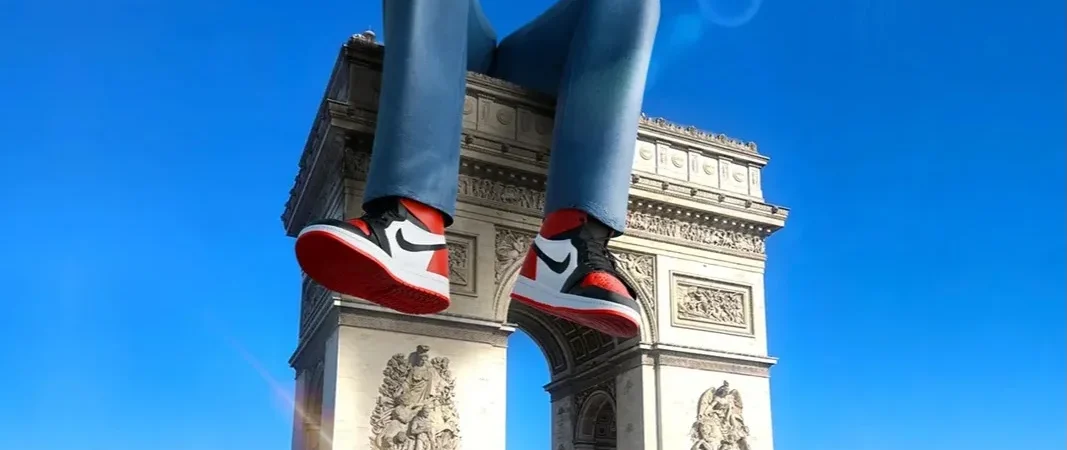
A 3D DOOH (anamorphic) campaign plays specially rendered video on a real screen, so people standing in the right place see the illusion in person. A CGI “fake OOH” campaign never appears on a real screen: designers add an impossible object, such as a giant product on a famous building, into video footage that is shared online. Both use computer graphics; the difference is whether anything physically happened.
Comparison
| 3D DOOH | CGI composited video | |
|---|---|---|
| Physical presence | Yes, on a booked screen | No |
| Who sees it | People at the site, plus filmed footage online | Online viewers only |
| Costs | Creative production plus media booking | Creative and footage only |
| Constraints | Screen shape, sweet spot, spot length, owner approval | Footage rights, location filming rules |
| Credibility | Real event that press can verify | Must not mislead viewers into thinking it was real |
Honesty and disclosure
CGI content that looks like a real installation can mislead. Under the CAP Code, marketing must not materially mislead. A simple label such as “CGI” avoids confusion, and is especially important if a post implies a landmark hosted the campaign. Using recognisable buildings or footage may also need permissions.
Which to choose
- 3D DOOH when you want a real-world moment, press coverage and footage of genuine reactions.
- CGI video when the campaign lives on social, budget for media is limited, or the idea is physically impossible.
- Both: a real screen moment, plus CGI extensions clearly labelled.
Read 3D anamorphic billboards explained. TRZY UK’s creative team produces CGI and anamorphic content.
Planning a 3D screen piece: the steps
- Confirm the screen. The illusion depends on a specific screen shape (often a corner) and the main viewing angle, so get exact dimensions and photos from the media owner first.
- Storyboard for one viewpoint. Decide where most people stand or pass and design for that spot.
- Test early. Ask for a test play or a mock-up at the real size before final render.
- Plan the share of time. Most screens rotate ads; your piece may appear for a few seconds each loop. See share of loop.
- Plan how it will be filmed. Much of the value often comes from the video shared online, so arrange filming from the best angle.
Mistakes to avoid
- Presenting a CGI video as if it were filmed in a real street. If an object never appeared on a real screen, say so.
- Using a flat screen and expecting a 3D effect; most anamorphic effects need the corner or curve.
- Packing in too much motion so the brand is never clear.
- Forgetting copy approval and any landlord or council rules on lighting and motion near roads.
More questions
Is a CGI video of a fake billboard allowed?
Creative CGI is common, but it should not mislead people into thinking a real event happened when it did not. A simple label such as “CGI concept” avoids that.
Where can I see how 3D screens work?
See 3D anamorphic billboards in the UK and projection mapping.
Before you book
- Get the screen’s exact shape, size and main viewing angle from the media owner.
- Agree who owns and checks the 3D render before it is final.
- Ask for a test play on the real screen if possible.
- Plan filming separately, with permission to stand and shoot nearby.
- Decide how any CGI social version will be labelled.
Worked example: time on screen
Invented round numbers to show the arithmetic, not real rates or TRZY UK prices.
A corner screen runs a 60-second loop and your 15-second 3D piece takes one slot. That is 60 plays an hour. Over 12 hours a day for 7 days, it plays 60 × 12 × 7 = 5,040 times. A short, simple idea that lands in 15 seconds will do better than a complex one.
Is 3D more expensive than normal DOOH?
Usually the production is, because rendering for a specific screen takes more work. Media cost depends on the screen and time bought.
Where are 3D screens in the UK?
They are mainly large city-centre screens. See 3D anamorphic billboards.